
Packing for residential rehab in another country is not like packing for a normal holiday. Most people are trying to prepare while also dealing with stress, uncertainty, family conversations, travel arrangements, and sometimes poor sleep or physical symptoms. That can make even simple decisions feel bigger than they are.
A clear plan helps. If you know what is genuinely useful, what usually is not allowed, and what needs extra paperwork, you can arrive feeling steadier and more prepared. From a UK point of view, the main priorities are comfort, safety, documentation, and medication rules.
Why packing for rehab abroad needs a different approach
Residential rehab is still everyday life, just in a structured setting. You will need clothes to wear, toiletries to use, and ways to stay comfortable. Yet you are also entering a clinical environment with routines, safety checks, and rules about what can be brought onto site.
That is why the best packing approach is usually simple rather than generous. Bring enough for your stay, but not so much that your suitcase becomes difficult to manage or full of things you will never use. Most people do better with practical items, a few familiar comforts, and all health-related documents kept together in one place.
If you are travelling from the UK to Denmark or another European destination, there is also the extra layer of air travel and border rules. Prescription medicines, electrical adapters, weather differences, currency, and travel insurance can all matter.
Essential documents and medication for rehab abroad
The most important part of your packing is not clothing. It is paperwork and medication. If these are missing, admission can be delayed, travel can become stressful, and treatment staff may need to spend time sorting out issues that could have been prevented at home.
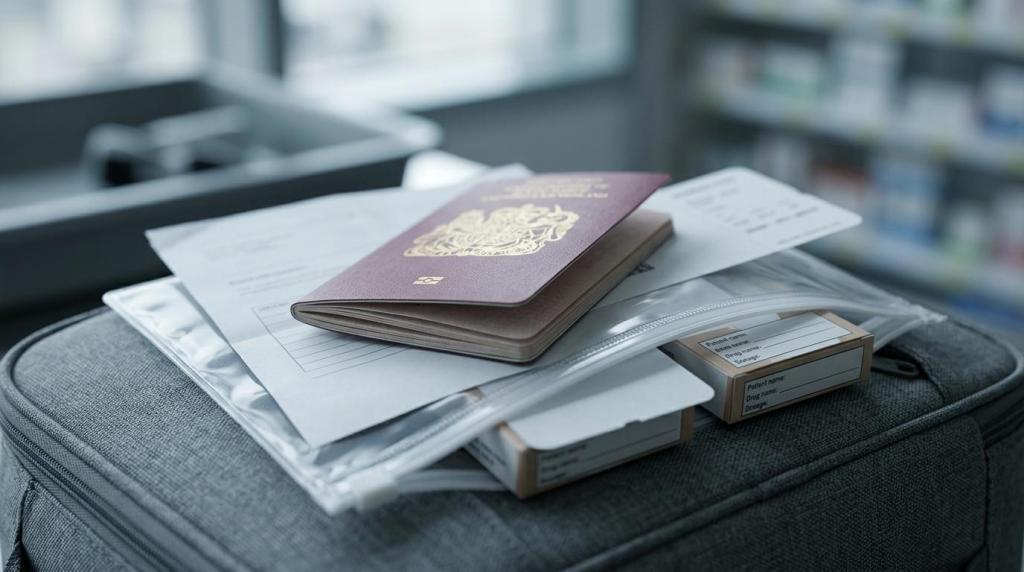
Keep all key documents in your hand luggage, not your checked suitcase. It is sensible to have paper copies and digital copies on your phone as well.
- Identification: passport, driving licence if relevant, and any travel confirmations
- Admission paperwork: booking confirmation, referral letters, assessment notes, contact details for the centre
- Insurance documents: travel insurance, private health insurance details, GHIC if applicable
- Medical information: list of current medication, allergies, recent prescriptions, GP or consultant letters
- Emergency contacts: next of kin, GP surgery, prescribing pharmacy
Medication needs extra care. UK guidance is clear that prescribed medicines should be carried in original packaging, with the label visible. If you are travelling with controlled drugs or medicines that may be questioned at the airport, take a doctor’s letter stating your name, the medicine name, strength, dose, and why it has been prescribed. UK travellers can usually take up to a three-month supply of certain controlled medicines for personal use, but the destination country may have its own rules, so it is wise to check with the embassy or the treatment provider before you fly.
Airports do allow essential medicines in hand luggage, including liquids over 100 ml in some cases, but you may need to show evidence that they are medically necessary. Do not rely on a weekly pill organiser alone. Bring the original boxes or pharmacy packets.
Clothing and footwear for residential rehab stays
Clothing should make daily life easier. Rehab often includes group sessions, one-to-one therapy, meals, rest time, and sometimes walks, light exercise, mindfulness, or yoga. That means comfort matters more than style.
If you are staying for several weeks, pack enough for around seven days and plan to use the laundry facilities if they are available. Choose clothes that wash easily and work in layers. This matters even more if you are going to Denmark, where weather can shift quickly and rain is common outside summer.
A useful clothing pack often includes:
- T-shirts and long-sleeved tops
- Joggers or other comfortable trousers
- Underwear and socks
- Sleepwear
- Trainers or walking shoes
- Slippers or flip-flops for indoor or shower use
- Waterproof jacket
- Warm jumper or fleece
If the programme includes gym sessions, yoga, swimming, or outdoor activities, ask in advance and add what you need. A small number of centres welcome relaxed, informal clothing but may discourage garments with offensive slogans, revealing cuts, or references to alcohol or drugs. If you are unsure, plain and practical is almost always the safest choice.
Toiletries and personal care items for rehab settings
Personal care items help keep a sense of routine, which can be reassuring in the first few days. Bring the basics you use every day, especially if a familiar toothpaste, moisturiser, or shampoo makes you feel more settled.
That said, residential centres often restrict certain items for safety reasons. Glass bottles, alcohol-based mouthwash, aerosols, and some sharp grooming tools may not be allowed. Travel-sized containers are easier to manage and better for flying.
Pack a simple wash bag rather than a large one. A good rule is to bring what you truly use in a normal week, not what you might use in theory. Include glasses, contact lenses, hearing aid batteries, or any other daily essentials that would be difficult to replace quickly abroad.
What to leave at home before entering rehab abroad
Most centres give some guidance about prohibited items before admission, but people still worry about getting it wrong. The safest option is to assume that anything intoxicating, dangerous, or easily misused will not be allowed.
After checking the centre’s policy, it usually makes sense to leave out the following:
- Alcohol and drugs: never pack these, even in small amounts
- Loose medication: staff usually want medicines in original packaging
- Aerosols and glass containers: often restricted for safety reasons
- Sharp items: razors, scissors, and similar items may be limited
- Expensive jewellery
- Large sums of cash
- Candles
- Speakers or bulky electronics
- Gambling-related items
Some centres allow smoking or vaping only in designated outdoor areas. If nicotine is relevant for you, ask the clinic what the rule is before you travel and whether supplies should be brought, declared on arrival, or stored in a particular way.
Electronics, money and comfort items for a residential stay
Many people now expect to bring a phone, charger, and headphones, and a good number of centres allow this, though use may be restricted during therapy sessions. If you are travelling from the UK to Denmark, remember that Denmark uses 230V electricity and a different plug type, so a travel adapter is essential.
A laptop or tablet may be allowed, though it depends on the centre. If your stay is focused fully on treatment, it may be worth asking yourself whether you really need extra devices. Sometimes a phone, a charger, and a notebook are enough.
A few comfort items can help without making packing complicated.
- Useful comforts: journal, pen, a paperback, family photos, religious or spiritual text
- Weather-specific extras: umbrella, gloves, scarf, thermal layers in colder months
- Medical equipment: CPAP machine, glucose monitor, inhaler, mobility aid, spare batteries
- Travel basics: adaptor plug, reusable water bottle if permitted, small day bag
For money, carry a modest amount of local currency and a debit or credit card that works abroad. Denmark uses Danish kroner. Keep valuables to a minimum. If you would be upset to lose an item, it is usually better not to take it.
A practical packing checklist for rehab abroad from the UK
The table below gives a quick reference point. It is not a substitute for the clinic’s own rules, though it can help you organise your bag without overthinking every item.
| Category | Pack this | Check before travel |
|---|---|---|
| Documents | Passport, admission letter, insurance details, emergency contacts | Passport validity, transfer details, visa requirements if relevant |
| Medication | Prescriptions in original packaging, doctor’s letter, medication list | Import rules in destination country, hand luggage rules, controlled drug rules |
| Clothing | 7 days of comfortable outfits, sleepwear, layers, waterproofs, trainers | Weather at destination, laundry access, activity dress code |
| Toiletries | Toothbrush, toothpaste, shampoo, soap, deodorant, feminine hygiene products | Restrictions on aerosols, glass, alcohol-based products, sharps |
| Health aids | Glasses, contacts, hearing aids, inhalers, mobility equipment | Whether equipment needs to be declared or checked by staff |
| Electronics | Phone, charger, adapter, headphones | Centre policy on phones, Wi-Fi access, session rules |
| Comfort items | Journal, photos, one or two books | Limits on quantity, anything not allowed in shared spaces |
| Money | Bank card, small amount of local currency | Foreign transaction fees, whether the centre stores valuables |
Questions to ask the rehab centre before you pack
Even a strong checklist cannot answer every detail, because every rehab has its own daily rhythm and safety procedures. A short phone call or email can save a lot of uncertainty.
Ask direct questions. People often worry that they are being difficult, but treatment teams are used to these queries and would usually prefer you to ask early.
- Medication rules: Do you need original boxes, a doctor’s letter, or advance approval?
- Phone and laptop use: Are devices allowed in rooms, and when must they be switched off?
- Laundry and linens: Should you bring towels, slippers, or extra bedding?
- Smoking policy: Is smoking or vaping allowed, and where?
- Activity kit: Do you need gym wear, swimwear, walking shoes, or outdoor clothing?
If you are travelling to a Danish centre, it is also worth asking about transport from Copenhagen, local shops nearby, and what can be bought after arrival if you decide to pack lightly.
Packing for detox abroad versus longer residential treatment
If your stay begins with medically supervised detox, comfort becomes even more important. Loose, soft clothing, easy-to-remove layers, and familiar toiletries can make the first days less uncomfortable. You may spend more time resting and less time taking part in wider activities at the start, so there is little value in overpacking.
For a longer residential stay, think about rhythm. You need enough clothing for therapy, downtime, sleep, and light activity. You may also want one or two items that help you feel like yourself without tying you to home too strongly.
A helpful way to judge your suitcase is this: can you carry it without strain, find what you need quickly, and live out of it without feeling deprived? If the answer is yes, you have probably packed well.
A calmer way to prepare in the final days before travel
Packing often becomes emotional because it makes treatment feel real. That is normal. Some people feel relief, some feel fear, and many feel both at once.
Try not to treat packing as a test. You do not need the perfect bag. You need the essentials, the right documents, and enough comfort to get through the first few days. If something small is forgotten, many items can be replaced. Passport issues, medication problems, and missing admission paperwork are the parts that deserve the most attention.
It can help to pack in stages rather than all at once: documents first, medication second, clothing third, toiletries last. If a family member or trusted friend is supporting you, ask them to help check your list before you leave for the airport.
Starting treatment abroad is a big step. A well-packed bag will not remove every worry, but it can remove several avoidable ones, and that gives you more room to focus on getting there safely and settling in.