
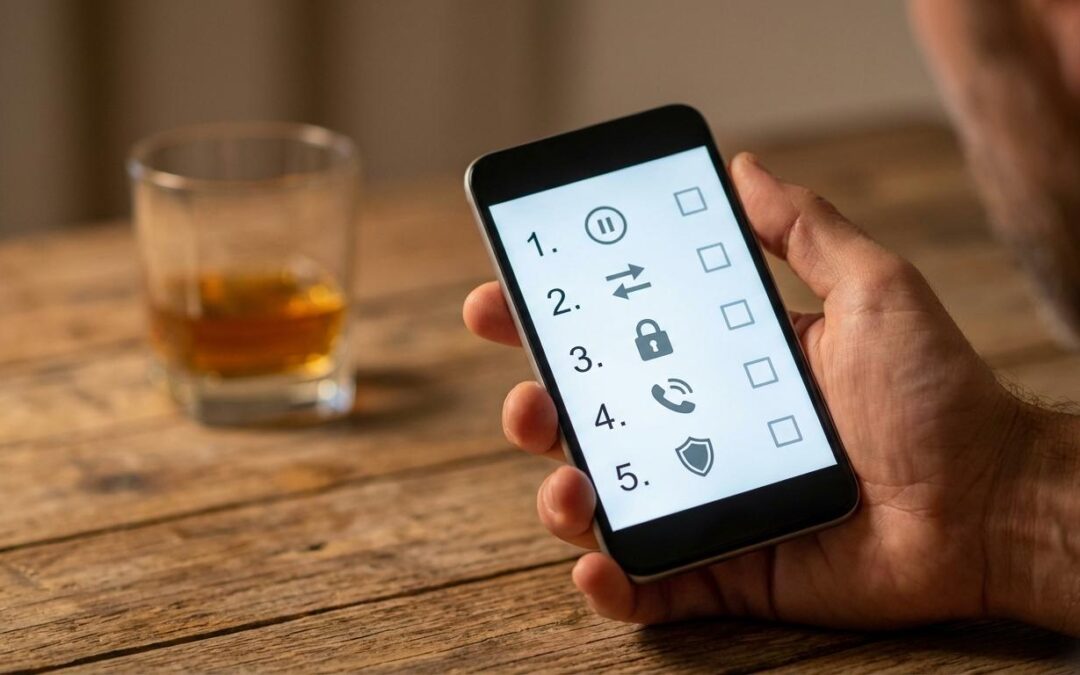
Relapse rarely arrives out of nowhere. More often, it builds quietly through stress, changes in routine, old cues, or a gradual drift away from the habits that were keeping you steady. A relapse prevention plan is not a promise that life will stay easy. It is a set of practical tools you can reach for when life is not.
Long-term recovery tends to be less about willpower and more about systems. The most helpful plans are simple enough to use on a difficult day, and flexible enough to grow with you.
What a relapse prevention plan is (and what it is not)
A good plan is a working document. It sets out your personal risk situations, early warning signs, and the actions you will take when things start to wobble.
It is not a test you either pass or fail.
Many people find it reassuring to separate three layers of relapse:
- Emotional drift: not naming feelings, isolating, running on empty.
- Mental bargaining: romanticising past use, “just one” thinking, keeping secrets.
- Behavioural steps: visiting risky places, contacting old using networks, actual use.
Catching the earlier layers is where most “long-term” success is built.
Build your personal relapse map: triggers, needs, and warning signs
Before choosing tools, clarify what you are trying to manage. Triggers are not only people or places. They can be internal states (shame, loneliness, restlessness), body states (poor sleep, hunger), or even positive events (celebrations, pay day, holidays).
A practical way to map risk is to look at patterns over time:
- What tends to happen in the 24 to 72 hours before cravings increase?
- What do you stop doing when you are sliding (meals, exercise, honest messages, meetings, therapy homework)?
- What do you start doing (scrolling late at night, cancelling plans, working too much, hiding)?
After you have written a first draft, keep it realistic by focusing on what you can observe. “I feel fine” is hard to measure. “I slept 4 hours, skipped breakfast, and ignored messages” is clearer.
Many people use a short checklist to spot early drift. After you have described your own warning signs, it can help to keep a few of them visible:
- sleep disruption
- irritability
- cancelling plans
- secrecy
- “I don’t need help anymore” thoughts
This is not about paranoia. It is about noticing what your brain and body do under strain.
Core tools that tend to hold up over time
The tools below are not trendy extras. They are the basics that people keep coming back to, including in evidence-based approaches like CBT, Motivational Interviewing, and mindfulness-based relapse prevention.
1) If-then plans (implementation intentions)
Write a few short “if-then” statements for your most common high-risk moments. They reduce decision fatigue because you are not inventing a response in the middle of a craving.
Examples:
- If I drive past the shop that used to be a trigger, then I call someone before I get home.
- If I feel rejected after an argument, then I do a 10-minute walk and send a message that says “I’m activated and need grounding, not solutions”.
Keep these statements short. One sentence is enough.
2) Self-monitoring that is light, not perfect
Tracking helps you see patterns early, but it must be sustainable. Many people abandon tracking when they aim for detailed journaling every day.
A workable option is a 60-second daily check-in (paper or phone):
- Sleep (0 to 10)
- Stress (0 to 10)
- Cravings (0 to 10)
- Connection (0 to 10)
- One thing I did that helped
That last line matters. A plan that only records problems can feel punishing.
3) Skills practice (not just reading about skills)
Coping skills work better when rehearsed. In therapy, this might include role-play, urge-surfing practice, or challenging “permission-giving” thoughts. At home, it can be repeating one technique until it becomes familiar.
A few skills that many people rate as genuinely useful:
- Urge surfing: noticing the craving rise and fall without feeding it.
- Delay: committing to “not now” for 20 minutes, then reassessing.
- Cognitive check: writing down the thought, then answering it like you would answer a friend.
- HALT scan: Hungry, Angry, Lonely, Tired, and what to do about it.
4) Support that is scheduled, not only “when it gets bad”
Long-term change is helped by predictable contact. That might be peer support, a therapist, a recovery coach, or structured aftercare.
It can help to write your support system as roles, not only names:
- Accountability person: someone you can be blunt with.
- Practical helper: someone who can help with logistics in a crisis (childcare, a lift, sitting with you).
- Professional contact: a clinician or service for clinical risk, detox advice, or relapse response planning.
If you are not sure who fits each role, that is useful information, not a failure. It gives you a clear next step.
Choosing tools: a realistic comparison
Different tools help in different ways. Many people do best with a mix: one or two personal tools, plus human support, plus professional follow-up.
| Tool | What it helps with | Strengths | Watch-outs | How to make it last |
|---|---|---|---|---|
| Paper journal or simple notes app | Patterns, triggers, early warning signs | Private, low cost, flexible | Can become all-or-nothing | Keep it to 1 minute per day, review weekly |
| CBT-based therapy and relapse prevention sessions | Skills, thinking traps, planning | Structured, personalised, evidence-informed | Requires time and commitment | Agree a homework routine and revisit the plan monthly |
| Peer support groups (AA, NA, SMART Recovery) | Belonging, accountability | Free or low cost, ongoing | Fit varies by group style | Try 3 different meetings before deciding |
| Smartphone recovery apps | Craving logs, reminders, coping prompts | Always available, discreet | Engagement often drops over time | Use only 2 to 3 features, turn off non-essential notifications |
| Online programmes and telehealth | Access to structured help at home | Flexible, can support rural schedules | Needs stable internet and privacy | Schedule sessions like appointments, not “when you have time” |
| Mindfulness training or MBRP-style practice | Stress tolerance, craving response | Can improve emotional regulation | Takes practice, can feel slow | Start with 5 minutes, same time daily |
| Wearable alcohol monitoring (in some settings) | Accountability and objective feedback | Removes “grey areas” | Cost, comfort, privacy concerns | Works best when paired with agreed support and incentives |
Research on apps is mixed, with some studies showing benefit and many showing drop-off in use over time, while therapies like CBT and mindfulness-based relapse prevention have stronger support in longer follow-ups. For many people, technology is most helpful as an add-on rather than the whole plan.
A maintenance rhythm that does not take over your life
A relapse prevention plan should support your life, not replace it. Many people do well with a light weekly structure that keeps them connected to their recovery without making every day about addiction.
A simple rhythm might include:
- one weekly review of triggers and wins
- one supportive contact you do not cancel
- one replenishing activity that has nothing to do with “recovery work”
That last point matters because long-term stability is also about building a life that feels worth protecting.
The “24-hour plan” for cravings and high-risk moments
When cravings hit, complexity is the enemy. Write a short set of steps you can follow even when you are flooded.
- Pause and name it: “This is a craving. It will pass.”
- Change state fast: water, food, shower, walk outside, slower breathing for 2 minutes.
- Reduce access: leave the area, hand over bank cards, delete a dealer number, avoid a risky route.
- Contact a human: one person who knows the truth, even if you only say “I need company”.
- Do one protective action: meeting, online session, grounding practice, get home, go to bed early.
If step 4 feels impossible, that is often a sign the moment is more serious than it looks. This is exactly when support is most needed.
If a slip happens: use your plan rather than shame
Some people use “relapse” to mean any use at all. Others separate a brief slip from a full return to old patterns. The label matters less than what you do next.
A compassionate relapse response plan often includes:
- stopping use as quickly as possible (even if you feel embarrassed)
- telling someone safe within 24 hours
- returning to structure for the next 72 hours (sleep, meals, low stimulation, support)
- reviewing what happened with curiosity, ideally with professional help
Shame thrives in secrecy. Recovery thrives in honesty.
How relatives can help without becoming the police
Relatives often carry fear, and fear can come out as control, interrogation, or walking on eggshells. A written plan can reduce conflict because everyone knows what “help” looks like.
After you have agreed boundaries together, it can help to write a short section for family or close friends:
- What to watch for: the person’s early warning signs (not general stereotypes).
- What helps: specific actions (a lift to a meeting, a walk, sitting quietly).
- What does not help: arguing about the past, threats, searching belongings.
- Who to call: clinician, support person, emergency options if safety is at risk.
Relatives also deserve support in their own right. Many treatment settings offer family meetings or guidance so loved ones are not carrying this alone.
Professional support and aftercare in North Zealand
Long-term relapse prevention is often strongest when it is built into aftercare, not treated as a one-off worksheet at discharge. Structured follow-up, regular check-ins, and a plan that changes as life changes can keep recovery practical.
At Floralund Fredensborg in North Zealand, relapse prevention planning is typically part of a wider approach that can include medically supervised detoxification, residential rehabilitation in a calm, hotel-like setting, evidence-based therapies (including CBT, Motivational Interviewing and mindfulness), family involvement, and structured outpatient follow-up. The centre’s “freedom under responsibility” approach can suit people who need treatment while still staying connected to real-life responsibilities, with support available around the clock.
If you are unsure what level of help is right, anonymous advice can be a good first step. It allows you to talk through risk, options, and next actions without pressure, and it can be helpful for relatives as well.