
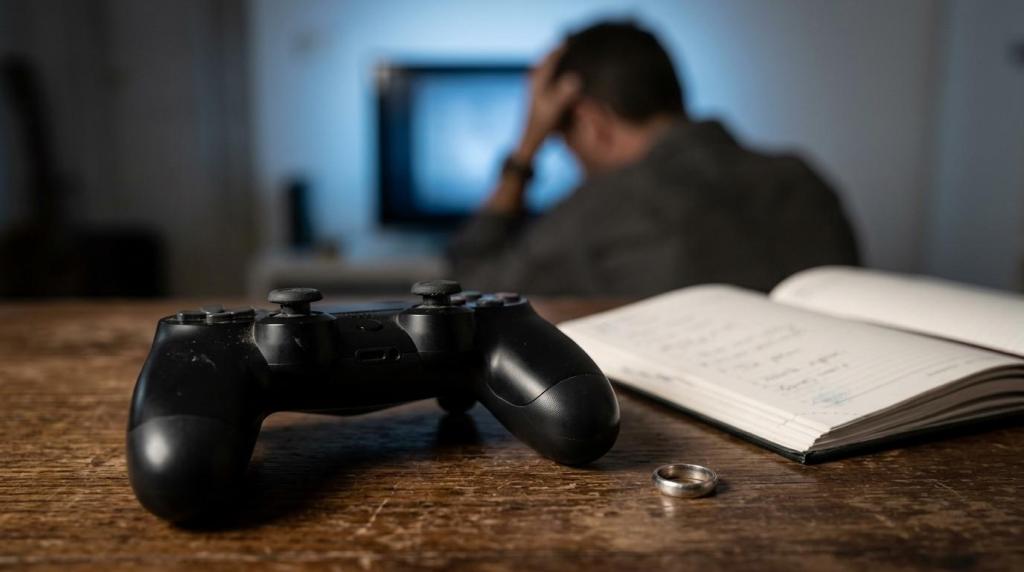
For many adults, gaming is a normal part of life. It can be relaxing, social, creative, and genuinely enjoyable. Online games may also offer structure, achievement, and connection at times when everyday life feels flat or difficult.
The problem is not gaming itself. The concern starts when gaming becomes hard to control and begins to damage sleep, work, relationships, finances, mood, or basic daily routines. When that happens, the question is no longer “How many hours is too many?” but “What is this costing me, and can I still stop?”
What gaming addiction in adults can look like
Adults with serious gaming problems do not always fit the stereotype people imagine. They may be working, parenting, studying, or functioning well in some parts of life while struggling badly in private. That can make the problem easier to hide, and easier to excuse.
The World Health Organization describes gaming disorder as a pattern of behaviour marked by impaired control over gaming, increasing priority given to gaming over other activities, and continuing or escalating gaming despite negative consequences. For a formal diagnosis, the pattern would normally be present for at least 12 months and cause significant problems in personal, family, social, educational, occupational, or other important areas of life.
That definition matters because it shifts the focus away from moral judgement. It is not about whether gaming is “lazy” or “immature”. It is about loss of control and real harm.
| Everyday gaming habit | Clinically concerning gaming pattern |
|---|---|
| Gaming is a hobby among other interests | Gaming pushes out other interests and responsibilities |
| Time spent varies, but can be reduced when needed | Repeated failed attempts to cut down |
| Sleep or routine is mostly stable | Sleep, meals, hygiene, or exercise are regularly neglected |
| Relationships are mostly unaffected | Arguments, withdrawal, or isolation are common |
| Work or study continues | Missed deadlines, poor performance, or absenteeism appear |
| Gaming feels enjoyable | Gaming feels compulsory, difficult to stop, or tied to relief from distress |
A person does not need to match every sign in the table for help to be worth seeking. Even a few patterns can be enough if the impact is getting worse.
Signs gaming is affecting daily functioning
Adults often minimise gaming problems because the habit can look less dramatic than alcohol or drug misuse. Yet the impact can still be serious. People may lose sleep for months, neglect health, withdraw from partners or children, call in sick, spend beyond their means on games or in-game purchases, or use gaming as their main way to manage low mood and stress.
The key issue is functioning. If gaming keeps taking priority over things that matter, it deserves attention.
Some common warning signs include:
- Work and study: missed deadlines, reduced concentration, lateness, or using working hours to game
- Relationships: arguments about time, secrecy, irritability when interrupted, or emotional distance
- Daily activities: poor sleep, skipped meals, reduced exercise, neglected hygiene, or an upside-down routine
- Mental health: anxiety, low mood, guilt, restlessness, or feeling empty when not gaming
- Money: spending that feels hidden, impulsive, or hard to control
- Control: repeated promises to cut back that do not last
Sometimes the warning signs are subtle at first. A person may stay up “just one more match” most nights, stop seeing friends offline, lose interest in sex or hobbies, or feel constantly tired and wired at the same time. Small changes that happen often can build into a much bigger problem.
When to seek help for gaming addiction
A good rule is this: seek help when gaming no longer feels truly voluntary.
If you keep trying to reduce it and cannot, if your life is being organised around the next chance to play, or if important parts of life are slipping and gaming continues anyway, it is sensible to speak to a professional. You do not need to wait until things become severe.
There is also no need to wait for a formal diagnosis. The WHO criteria refer to a pattern normally present for 12 months, but asking for advice earlier is still a reasonable step if the harm is already clear. Early support can prevent deeper problems with work, relationships, health, or mood.
In England, NHS services include support for gaming disorders, and specialist assessment and treatment pathways do exist. That matters because many adults assume there is “nowhere to go” for this problem. There is help available, and gaming-related treatment is increasingly recognised as a valid part of addiction and mental health care.
Why gaming can become hard to stop
Gaming can meet real psychological needs. It can offer quick reward, a sense of progress, clear goals, social belonging, distraction from painful feelings, and a place where performance feels more manageable than real life. None of that means someone is weak or irresponsible. It means the behaviour is doing an important job, even if the long-term cost is high.
Many adults describe gaming as a way to switch off after stress, conflict, loneliness, or disappointment. Over time, that coping pattern can become very fixed. The brain starts to expect the fast relief and stimulation gaming provides, while work, family life, sleep, and ordinary responsibilities feel slower and less rewarding.
Common drivers behind compulsive gaming may include:
- stress relief
- social connection online
- escape from anxiety or low mood
- boredom and lack of structure
- perfectionism or fear of failure offline
- reward loops and in-game progression systems
This is also why shame rarely helps. Telling yourself to “just have more willpower” often misses the point. If gaming has become your main way of regulating emotions, filling time, or feeling competent, cutting down may leave a real gap that needs care and support, not just discipline.
For some adults, gaming problems also sit alongside alcohol use, cannabis use, stimulant use, gambling, or other compulsive behaviours. In those cases, a broader addiction assessment can be especially useful because one behaviour may be propping up another.
What professional help for gaming addiction may involve
Treatment for gaming addiction is not usually about banning games forever on day one. It is more often about getting a clear picture of what is happening, why it is happening, and what needs to change so life feels manageable again.
A proper assessment may look at gaming patterns, sleep, mood, anxiety, trauma history, attention difficulties, work stress, social isolation, relationship strain, and any use of alcohol or drugs. The goal is to find out whether gaming is the main issue, part of a wider picture, or both.
At present, cognitive behavioural therapy is the best-supported treatment approach in the research base, although the evidence is still growing. In practical terms, CBT may help someone notice triggers, challenge the thoughts that keep the cycle going, build healthier routines, reduce avoidance, and practise alternative ways of coping with cravings or difficult feelings.
Treatment may also include:
- Routine repair: sleep, meals, activity, work structure, and time away from screens
- Psychological support: work on anxiety, depression, trauma, shame, or social withdrawal
- Motivation work: strengthening reasons for change when part of the person still wants to keep gaming
- Relationship support: helping partners or family respond clearly without constant conflict
- Aftercare: planning for relapse risks, high-stress periods, and gradual return to balance
Some people do well with outpatient sessions. Others may need more intensive support, especially if gaming sits with other addictions or mental health problems. What matters most is not the label, but whether the support matches the level of disruption in daily life.
How partners and relatives can raise concerns about gaming
People close to the person are often the first to notice that gaming is no longer just a hobby. They may see the sleep loss, irritability, missed commitments, secrecy, or withdrawal from family life long before the person gaming is ready to name it.
The way concerns are raised can make a real difference. Criticism, mockery, or blanket ultimatums can push the person further into defensiveness. A calmer, more specific approach is often more useful.
Helpful ways to start the conversation include:
- Talk about changes you have seen, not character flaws
- Use concrete examples from the last few weeks
- Pick a neutral time, not during or right after gaming
- Ask what gaming is doing for them emotionally
- Be clear about the impact on you and the household
- Suggest support, not punishment
It can also help to set boundaries. A partner or relative does not need to accept dishonesty, financial harm, or ongoing disruption in the home. Support and boundaries can exist together.
First steps adults can take if gaming feels out of control
The first move does not need to be dramatic. It just needs to be honest.
If gaming is starting to run your day, try these steps:
- Track your gaming for one week, including start time, finish time, sleep, mood, and what you avoided doing.
- Write down three specific harms, not vague worries. Missed work, poor sleep, debt, conflict, isolation, low mood.
- Tell one trusted person what is going on.
- Book an appointment with a GP if cutting down has repeatedly failed.
- Ask about support for any linked issues, including anxiety, depression, ADHD traits, alcohol, or drug use.
Many people feel embarrassed asking for help with gaming because they think they should have sorted it out alone. That feeling is common, but it should not be the thing that keeps the problem going. If gaming is taking more from your life than it is giving back, speaking to a professional is a sensible and constructive next step. Confidential advice is available, and a first conversation does not commit you to anything beyond getting clearer about what is happening.